The American Revolution: B-D-A Assignments for Educators to Use
Introduction:
Personal Introduction:
My name is Mr. Turner, and I am a proud and aspiring teacher of American History. The history and traditions of our nation is something that has always fascinated me, and I’m here to enlighten my students with knowledge of our past, and how it paves the way to our future. This website is here to offer support to students and educators alike on reading activities relating to arguably the most pivotal event in our history: The American Revolution.
Reading U.S. History:
Reading is a part of the learning process many students find tedious, especially on a subject like history. It’s often filled with academic and content-area specific vocab that they might be unfamiliar with, and tend to be dense with information and details on events and people related to the topic. Besides, if it happened in the past, how important could this be and how does this affect me? But history is much more than just the past, it is the chronicle of humanity and it’s progress through the annals of time, including how it led to our present and how it dictates our future.
Reading in history differs from that in other subjects, with math and science tending to be more focused on terms and processes, and language arts focusing more on the theme an author is saying and the structure of the text, but not focusing as much on the historical context of what the author is speaking on. Reading is important in every subject, but reading in history teaches skills in patience and content analysis that isn’t seen in other content-areas.
Reading Challenges in U.S. History
The history of the United States of America is one told through movies, tv shows, and most importantly: text sources. Much of American History is told through written sources, especially in educational settings with textbooks. However, multiple challenges are often experienced by students and teachers alike. Here are some challenges that are encountered:
Vocabulary unfamiliar to students, but is needed to properly understand what the text is saying.
Dense load of content-area information
Due to dense load, can take a long time to get through the needed information.
Requires background knowledge for some information; can be new reader unfriendly.
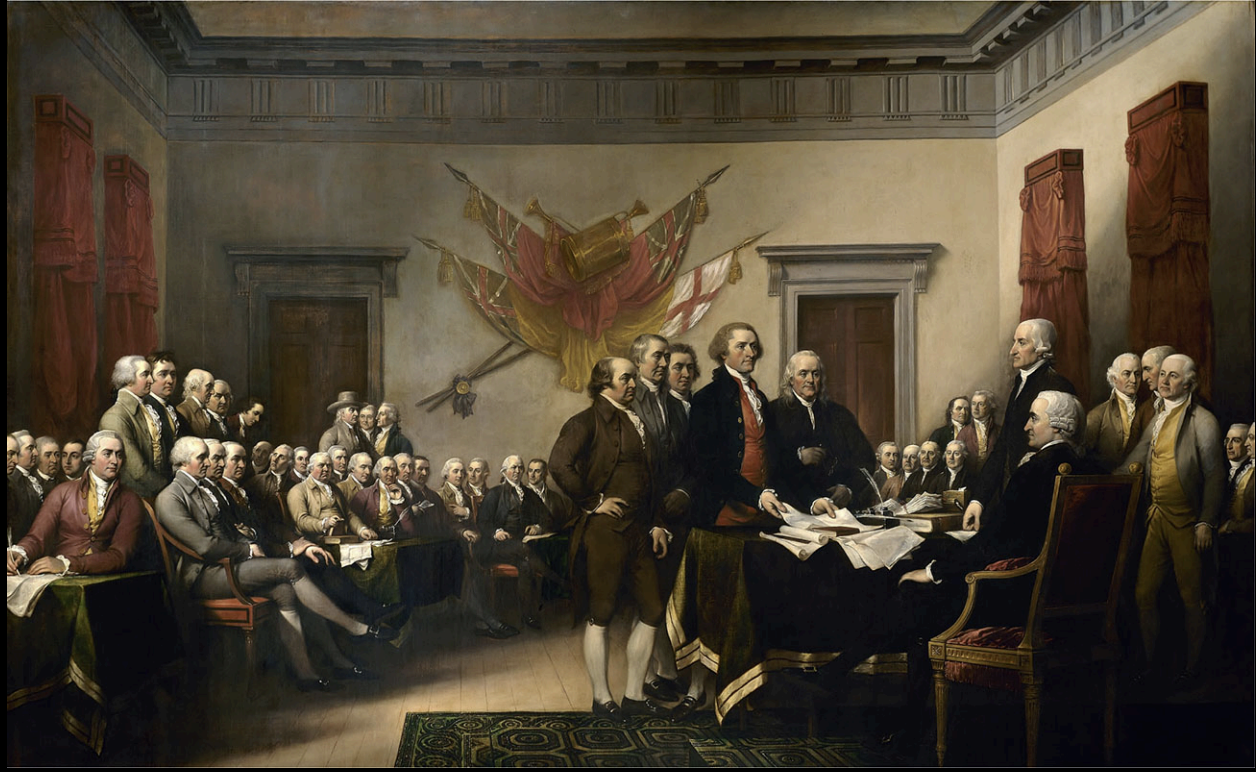
Both images come from the textbook. The link to the left offers access.
What Textbook Are We Looking At?
Openstax. U.S. History. Openstax, 2026.
This textbook provided by Openstax is a challenging, yet rewarding source for your students. For the purposes of our activities, we will be looking at Chapter 6: America’s War for Independence, 1775 - 1783.
The purpose of this chapter is to focus on the war the colonies waged against the British Empire to secure independence from them. It looks into the figures, events, and political movements that led to independance being achieved.
Vocabulary For The Chapter: Vocabulary Strategies
French and Indian War:
Conflict between the French and British in North America, alongside native American groups on both sides, ending in British victory and dominion over the continent.
Sons of Liberty:
Colonial protest group opposing Great Britain’s treatment of the colonies; well-known for events like the Boston Tea Party.
Coercive Acts/Intolerable Acts:
Series of laws after the Boston Tea Party Great Britain pushed onto Boston, to establish a tighter grip of control.
Minutemen:
Local rebel militiamen who were organized to form and fight at a minute’s notice.
Dunmore’s Proclamation:
Proclamation issued by Lord Dunmore, promising freedom to slaves who pledged their loyalty to the British Crown, and fought in it’s name against the rebelling colonists.
Republicanism:
Political philosophy that held up the ideals and virtues of having elected representatives holding power.
Popular Sovereignty:
Idea within republicanism where the people would choose who would represent them by majority rule.
Hessians:
German mercenaries hired by Great Britain to put down the American Rebellion.
Treaty of Paris:
Document at the end of the American Revolution, recognizing the colonies’ independence.
Patriot:
People in the American Colonies who supported the revolution and the authority of the Continental Congress.
Loyalists:
People in the American Colonies who supported the Crown and authority of the monarchy.
Confiscation Acts:
Laws passed during the Revolution that gave the Revolutionary forces the authority to take Loyalist land and property.
Continental Currency:
First American money, though it wasn’t very effective, due to inflation from high printing.
Mecklenburg Resolves:
North Carolina’s declaration of rebellion against Great Britain.
Thirteen Colonies:
The British colonies in North America who rose in rebellion against Great Britain.
Yorktown:
The Virginia port where British General Hugh Cornwallis surrendered to American forces.
Making Meaning from Context:
This strategy helps student analyze the surrounding details of a vocab term. For example, the term “Minuteman,” has the word minute as a root word, implying that time was a contextual factor. In this case, it means that the men were formed and organized to be ready to fight at a minute’s notice.
Vocabulary Games:
These games are a great way to engage students in the content-area vocabulary, as it gives students an outlet to be competitive, and entertain themselves while learning the vocabulary. One example could be a game like Jeopardy, where the descriptions are the definitions of the vocabulary, and the answers are the terms.
Note Cards:
Students will need to learn and analyze vocabulary outside of the classroom, and as such, will need a strategy to study vocabulary. One way that helps is by utilizing notecards, where students train their memory on terms and their definitions. Since this strategy can devolve easily into rote-memorization, it is best to pair this strategy with another to ensure a more whole studying experience. Either way, it is still effective, as it trains students to identify definitions for words as soon as they read and identify the vocabulary word of choice.
B-D-A Reading Activities
With reading in U.S. History, there are multiple activities that are best used before, during, and after having students read to help facilitate their learning as much as possible. Here are links to some activities:
These activities work best with students, as they give multiple opportunities for students to utilize reading strategies that are aimed at helping them gain higher comprehension of the text, as well as make reading easier for them, thus making their reading abilities sharper as well. Through repetition before, during, and after reading, students develop keen skill in reading, which will benefit them not just in class, but later in life as well.
Supports for ESE/ESOL Students
The activities outlined in this website offer adequate supports to ESE and ESOL students:
ESE: They have models that are completed for them, giving a visual example that can help scaffold their learning. These models also pave clear routes to participation and learning, helping with ease of access to the content.
ESOL: These activities have visuals that help demonstrate the meaning they’re trying to convey, helping to bypass any language barriers. And since the examples are visual, they should be easier for the teacher to either translate for the ESOL learner, or to offer a key for important terms found in the activity.